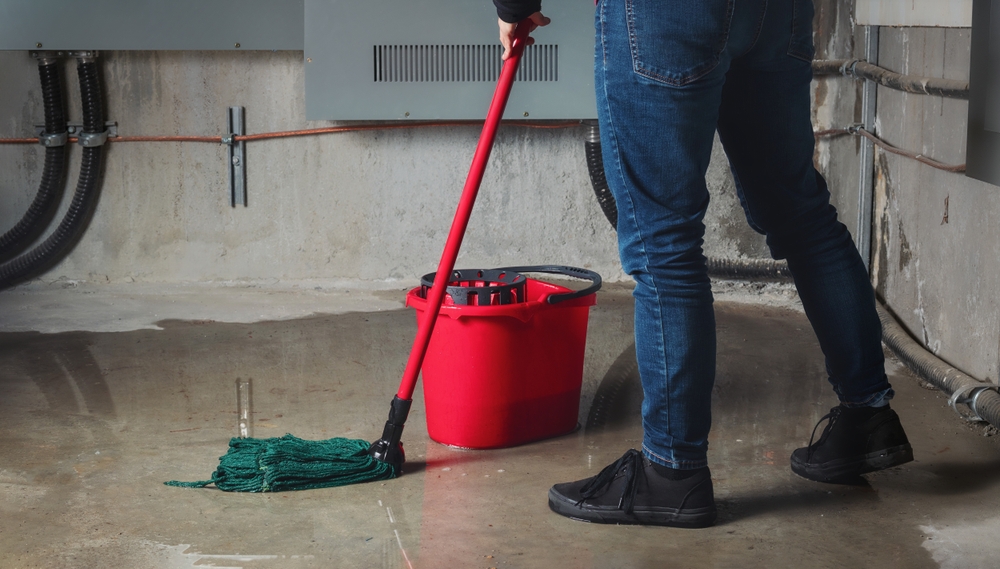
Picture this:
You head down to your basement to grab something from storage and notice the paint near the floor looking a little worse for wear. Maybe it’s bubbling slightly, or perhaps there’s a weird white crusty substance on the concrete. You make a mental note to repaint someday and move on with your day.
This would be a mistake.
Peeling paint in basement areas is your basement telling you there’s a moisture problem that needs attention now, not later.
Let’s talk about what these visual clues really mean and why ignoring them could cost you thousands down the road.
What Peeling Paint Is Actually Telling You

Peeling paint in basement spaces doesn’t happen because you bought cheap paint or because your basement is old. Peeling happens because moisture is getting where it shouldn’t.
How Moisture Destroys Paint
Paint needs a dry surface to adhere properly. When water seeps through your foundation walls or rises through concrete floors, it creates pressure behind the paint film. This pressure causes:
- Bubbling as water vapor gets trapped
- Peeling as the bond between paint and wall breaks down
- Flaking in large sheets once the adhesion fails completely
- Recurring problems even after you repaint
If you’ve repainted your basement only to see the same peeling pattern return within months, you’re dealing with basement moisture, not a paint quality issue.
The White Stuff on Your Walls Isn’t Mold

See that white, chalky residue on your concrete or brick walls? That’s efflorescence, a different kind of warning sign.
What Efflorescence Means
Efflorescence occurs when water moves through concrete or masonry, dissolving salts along the way. When the water evaporates at the surface, it leaves mineral deposits behind as a white, powdery substance.
Here’s why this matters:
Efflorescence proves water is actively moving through your foundation walls. It’s visual evidence of damp basement walls that need attention.
How To Spot It
You can clean efflorescence off, but it’ll keep coming back until you address the water intrusion causing it. Here are the early signs:
- White or grayish crusty deposits on concrete or brick
- Powdery texture that brushes off easily
- Appears near the base of walls or in corners
- Returns after you wipe it away
When Drywall Starts Telling Tales
Finished basements aren’t immune to moisture problems. In fact, drywall can hide issues until they become serious. Watch for these warning signs:
- Bubbling or blistering paint on drywall surfaces
- Soft or spongy spots when you press on the wall
- Brown or yellow staining at the base of walls
- Warping or buckling drywall sheets
- Musty odors even when everything looks dry
Damp basement walls behind finished drywall create the perfect environment for mold growth you can’t even see yet. By the time the drywall shows damage, moisture has been present for a while.
The Real Dangers of Basement Moisture
Visual damage to walls and paint is just the surface problem. Here’s what’s happening behind the scenes when you ignore basement moisture:
Health Risks
- Mold spores circulating through your home’s air
- Increased allergens affecting family members
- Respiratory issues, especially for children and the elderly
- Dust mites thriving in humid conditions
Structural Concerns
- Wooden floor joists and beams deteriorating
- Metal support structures rusting
- Foundation integrity weakening over time
- Decreased home value
Financial Impact
A small moisture problem caught early might cost hundreds to fix, but wait until you have rotted joists, widespread mold, or foundation damage, and you’re looking at repairs in the tens of thousands.
Why Acting Early Saves You Money
Here’s the pattern we see constantly: homeowner notices peeling paint in basement, ignores it, repaints over it, watches it peel again, finally calls for help after water damage spreads.
By that point, what could have been a straightforward drainage correction becomes a major waterproofing project involving multiple systems.
What Early Intervention Looks Like
Catching basement moisture early means:
- Simpler, more affordable solutions
- Less disruption to your home
- Prevention of secondary damage
- Protection of your home’s structural integrity
- Maintaining your property value
Get basement waterproofing services at the first sign of trouble, and you’ll fare better than most homeowners who either DIY or turn a blind eye when walls are awry.
Stop Ignoring What You’re Seeing. Let Us Take a Look!
Those damp basement walls with peeling paint aren’t going to dry out on their own. Repainting won’t fix the problem, nor will running a dehumidifier 24/7.
You need to identify where the moisture is coming from and implement the right solution for your specific situation. This requires professional assessment and properly installed waterproofing systems designed for your home’s needs.
Don’t wait until you’re dealing with mold remediation, structural repairs, or major waterproofing overhauls. Address basement moisture now. Schedule a free basement inspection.