
Home » Basement and Foundation Issues » Bouncy Floors? Here’s What It Means & How To Fix It
Bouncy Floors? Here’s What It Means & How To Fix It
Weakening floor joists, failing support beams, and moisture damage in the crawl space or basement are common culprits of bouncy floors. We identify the source of the problem and provide structural repair and crawl space solutions to restore long-term stability.
Find Your Solution
What Bouncy or Sagging Floors Can Mean
Bouncy or sagging floors are often a sign that something beneath your home is no longer providing the support it should. While the movement may seem minor at first, it can point to structural problems that worsen over time. Identifying the source early can help prevent additional damage and restore stability throughout your home.
Weakening Floor Joists
Floor joists naturally support the weight of your home, but age, moisture exposure, or excessive stress can cause them to weaken over time. As joists lose strength, floors may begin to flex, bounce, or sag when walked on.
Failing Support Beams or Posts
Support beams and columns help distribute weight evenly across your home’s structure. When these supports begin to shift, settle, or deteriorate, the flooring above may feel uneven or unstable.
Moisture Damage
Excess moisture in a basement or crawl space can gradually damage wooden structural components. Damp conditions may lead to warping, deterioration, or reduced strength in floor framing materials.
Wood Rot or Pest Damage
Wood rot and termite activity can compromise the integrity of floor supports beneath your home. Over time, damaged wood may no longer be able to properly support the flooring system, resulting in noticeable movement or sagging areas.
Common Signs to Watch For
Bouncy or sagging floors are often accompanied by other warning signs throughout the home:
Floors that feel soft, uneven, or springy when walked on
Sagging areas near walls, doorways, or high-traffic spaces
Cracks forming in drywall or interior walls
Doors or windows that stick or no longer close properly
Moisture or musty odors coming from the basement or crawl space
Visible wood damage, rot, or deteriorating support beams
Summit Basement Company
Our Solutions
We identify the source of floor instability and provide long-term repair solutions designed to restore strength, stability, and confidence in your home.
Crawl Space Encapsulation
Encapsulation helps control moisture and humidity beneath your home, creating a drier environment that protects floor joists and reduces the risk of future deterioration.
Crawl Space Encapsulation
Structural Repair
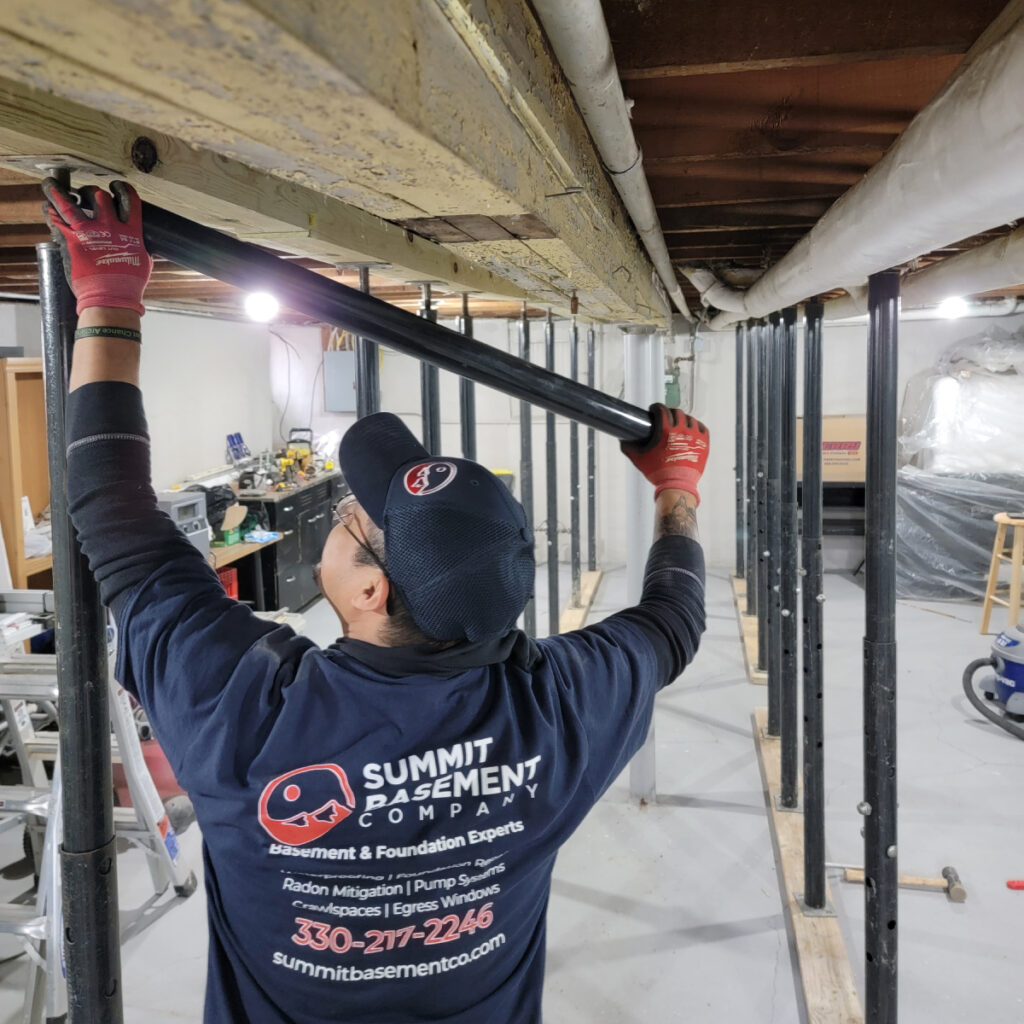
If weakened joists, failing supports, or damaged framing are causing your floors to sag or bounce, we provide structural reinforcement and repair solutions to restore proper support.
Structural Repair
Signs You Need a Professional Basement and Foundation Repair Company
Reach out today for an inspection if you notice any of the following:
Symptoms are getting worse over time
Multiple warning signs are appearing at the same time
Moisture or odors are coming from below the floor
The problem is affecting doors, walls, or other parts of your home
How It Works: The Summit Basement Approach
Inspection
We evaluate your basement or crawl space conditions, floor support system, moisture levels, and structural integrity.
Findings
You receive a clear explanation of what’s causing the problem, whether it’s weakened joists, settling supports, moisture damage, or crawl space humidity.
Plan
We recommend targeted repair and moisture control solutions based on your home’s specific needs.
Solution
Repairs and stabilization work are completed with care and precision to help restore strength, stability, and long-term protection for your home.
Testimonials
What Our Customers Are Saying
“Our crawlspace had a dirt floor & needed encapsulation with a vapor barrier, mold remediation, and installation of an automatic dehumidifier. Summit Basement Waterproofing did a great job. It is now dry, clean and moisture-controlled. Vapor barrier looks great! Dehumidifier was well worth it, no more musty smell in our house & humidity level is constantly controlled. Very professional, efficient & hard working. Highly recommend!”
Theresa B.
“They turned my mud hole, water logged crawlspace into a drier place. My house had been sinking slowly on one end, pulling the existing supports down and causing structural issues inside. I had an interior drainage system installed with a new sump pump including battery backup, and they added a dehumidifier. They replaced the existing supports and added more to make a more level inside. Although I have repairs yet inside because of letting it go for two decades, I can tell the floor beneath my feet is now solid. It only took four days. I appreciate all the guys hard work.”
Jennifer E.
“I live in a nearly 200 year old home with fieldstone basement and it needed more than tlc work. From quote to completion the everything has been painless. The price was VERY reasonable for the work. The construction team ended up doing 8 concreted beams, wall encapsulation, a sump pump channel and installation. They were great, even left the basement cleaner than what it was! Definitely glad I went with them for this.”
Guillermo M.
“Would recommend this company to anyone with basement issues. Jake and his team were very knowledgeable and thorough in explaining the process and science behind their work. 10/10!”
Danielle R.
“Dan and Greg were great! Came in and helped seal up the basement no problem. They were also able to help save some cost by working around pipes, which is greatly appreciated! Thank you!”
Dallas M.
FAQs
Frequently Asked Questions
What causes floors to feel bouncy or sagging?
Bouncy floors are often caused by weakened floor joists, failing support beams, moisture damage, or settling beneath the home. Over time, these issues can reduce the strength and stability of your floor system.
Are bouncy floors a structural problem?
They can be. While minor floor movement may happen naturally in older homes, noticeable sagging, flexing, or uneven areas often indicate underlying structural concerns that should be professionally evaluated.
Can moisture in a crawl space cause bouncy floors?
Yes. Excess moisture and high humidity can weaken wooden floor supports over time, leading to warping, rot, and structural deterioration that causes floors to feel unstable.
How do I know if my floor joists are damaged?
Signs of damaged floor joists may include sagging floors, soft spots, cracks in drywall, sticking doors or windows, or visible wood deterioration in the basement or crawl space.
Will bouncy floors get worse over time?
In many cases, yes. Structural and moisture-related issues typically continue to worsen if left unaddressed, which can lead to more extensive repairs and additional damage throughout the home.
Can bouncy floors be repaired?
Yes. Depending on the cause, repairs may include reinforcing floor joists, stabilizing support beams, addressing moisture problems, or installing additional structural supports to restore stability.
Does crawl space encapsulation help prevent floor problems?
Encapsulation helps control moisture and humidity beneath the home, which can protect floor joists and other structural components from future deterioration and damage.
When should I call a foundation or basement repair professional?
You should schedule an inspection if your floors feel increasingly soft, uneven, or unstable, or if you notice moisture issues, wood damage, or other signs of structural movement in your home.
Get to the Root Cause of the Problem
Bouncy or sagging floors are often a warning sign of hidden structural or moisture-related issues beneath your home. Addressing the problem early can help prevent further damage and restore confidence in your home’s stability.
Contact Summit Basement today to schedule your free inspection.